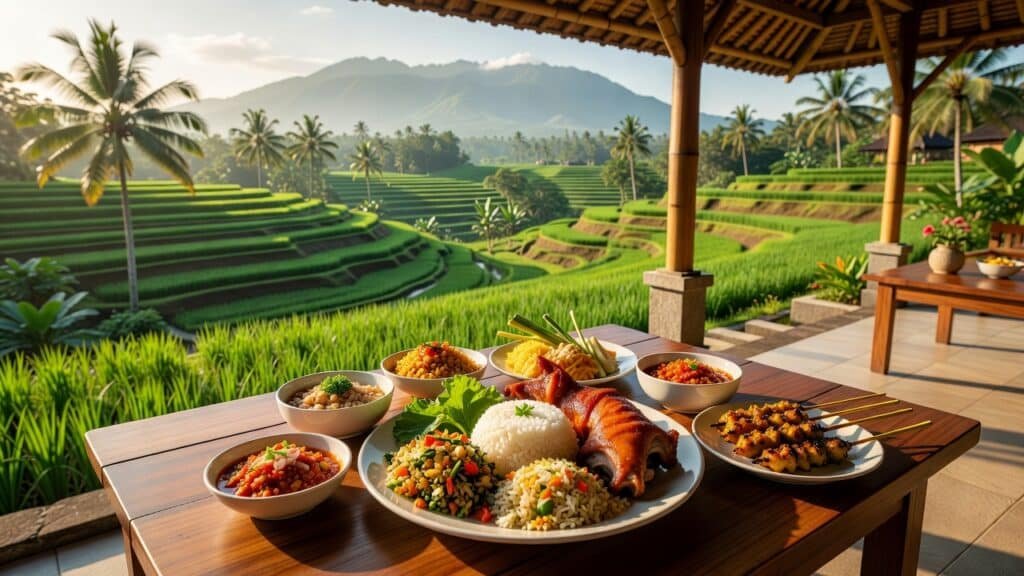
Beyond its breathtaking landscapes and vibrant culture, Bali is a destination that awakens all the senses, including your taste buds. Preparing for your trip to Bali also means preparing for an incredible culinary adventure. The Island of the Gods is brimming with exotic flavors, intoxicating aromas, and traditional dishes that tell a story. If you’re wondering what Balinese food must try during your stay, you’ve come to the right place. Let Salut Bali guide you through a feast of local delights, from authentic warungs to sophisticated restaurants, for an unforgettable gastronomic immersion.
Balinese Food Must Try: A Feast for the Senses
Balinese cuisine is a harmonious blend of spices, rice, and fresh produce. Every Balinese dish is a work of art, often prepared using ancient techniques. It’s impossible to talk about local gastronomy without mentioning the famous Nasi Goreng Bali. This fried rice, often served with a fried egg, vegetables, and sometimes chicken or shrimp, is an Indonesian classic reimagined with a Balinese twist. You’ll find it everywhere, from small street warungs (around 25,000 IDR, or €1.50) to more upscale restaurants.
For a more adventurous culinary experience, Babi Guling is a must-try. This spit-roasted suckling pig, marinated in a complex blend of spices (bumbu Bali), is crispy and incredibly tender. Places like Ibu Oka in Ubud are renowned, with portions starting from 50,000 IDR (around €3). Another delight not to be missed: Sate Lilit. These skewers of minced meat (fish, chicken, or pork) mixed with grated coconut, coconut milk, and spices, are grilled on lemongrass stalks, offering a unique and fragrant flavor. A plate of Sate Lilit typically costs between 30,000 and 40,000 IDR (around €2-€2.50). Explore local markets like Badung Market in Denpasar for authentic discoveries and unbeatable prices.
Practical Tips for Savoring Balinese Food
- Dare to Try Warungs: These small, often family-run local restaurants offer the most authentic Balinese cuisine and the best prices. Don’t be afraid of hygiene; many are very clean.
- Drink Bottled Water: Tap water is not potable. Always have a sealed bottle of water. For your journeys to these delicious spots, check our guide on transport in Bali.
- Ask for “Tidak Pedas”: If you’re not a fan of spicy dishes, specify “not spicy” as Balinese cuisine can be very hot.
- Wash Your Hands: Before eating, especially in markets or warungs, good hygiene is essential to avoid discomfort. Consider hand sanitizer in your suitcase for Bali.
- Try Tropical Fruits: Mangoes, rambutans, salaks… Markets are full of fresh and delicious fruits at unbeatable prices. Another aspect of the Balinese food must try.
Comparison of Balinese Culinary Specialties
To help you choose, here’s a comparative overview of Bali’s iconic dishes, including price estimates and spice levels.
| Dish | Description | Average Price (IDR) | Spice Level |
|---|---|---|---|
| Nasi Goreng | Fried rice with vegetables, egg, chicken/shrimp | 25 000 – 50 000 | Mild to Medium |
| Babi Guling | Spit-roasted suckling pig with spices | 50 000 – 80 000 | Medium to Hot |
| Sate Lilit | Skewers of minced meat and spices | 30 000 – 60 000 | Mild to Medium |
| Mie Goreng | Fried noodles with vegetables, egg, chicken/shrimp | 25 000 – 50 000 | Mild to Medium |
Prices are indicative and may vary.
FAQ about Balinese Food
Is Balinese food very spicy?
Yes, many Balinese dishes are prepared with strong spices, especially chili. However, it’s almost always possible to ask for a “tidak pedas” (not spicy) or “sedikit pedas” (slightly spicy) version in restaurants and warungs. Don’t hesitate to communicate your preferences.
Where can I eat the best Balinese food?
The best places to discover the Balinese food must try are often local warungs, night markets (like Pasar Sindhu in Sanur or Gianyar Market), and small family-run restaurants. In Ubud, Warung Babi Guling Ibu Oka is famous. For a more comfortable experience, many modern restaurants offer refined versions of traditional dishes.
Is it safe to eat street food in Bali?
Generally, yes, but with some precautions. Prioritize stalls frequented by locals, a sign of freshness. Observe the vendor’s hygiene and ensure food is cooked in front of you and served hot. Avoid dishes that have been exposed for too long. For any health concerns, consider travel insurance for Bali.
Ready to Explore the Flavors of Bali?
From the essential Nasi Goreng to the unique flavors of Babi Guling and Sate Lilit, Balinese cuisine is an invitation to travel and discovery. Every bite is an immersion into local culture. Prepare for a memorable culinary adventure. To organize your trip to Bali and discover all the island’s wonders, including its culinary delights, visit Salut Bali. Enjoy your meal and have a great trip!