The Mystery and Beauty of Bali Offerings: All About Canang Sari
Bali, the Island of the Gods, is a destination that captivates the soul far beyond its dreamy beaches and terraced rice fields. At the heart of its charm lies an omnipresent spirituality, visible on every street corner, in every home, and with every step. One of the most touching and emblematic expressions of this devotion is undoubtedly the Bali offerings canang sari. These small woven baskets, filled with colorful flowers and incense, are much more than mere decorations; they are the daily heartbeat of Balinese culture, a silent prayer offered to deities and spirits. Prepare to delve into the fascinating world of these rituals and understand their profound significance during your next trip to Bali.
Detailed Guide to Bali Offerings Canang Sari
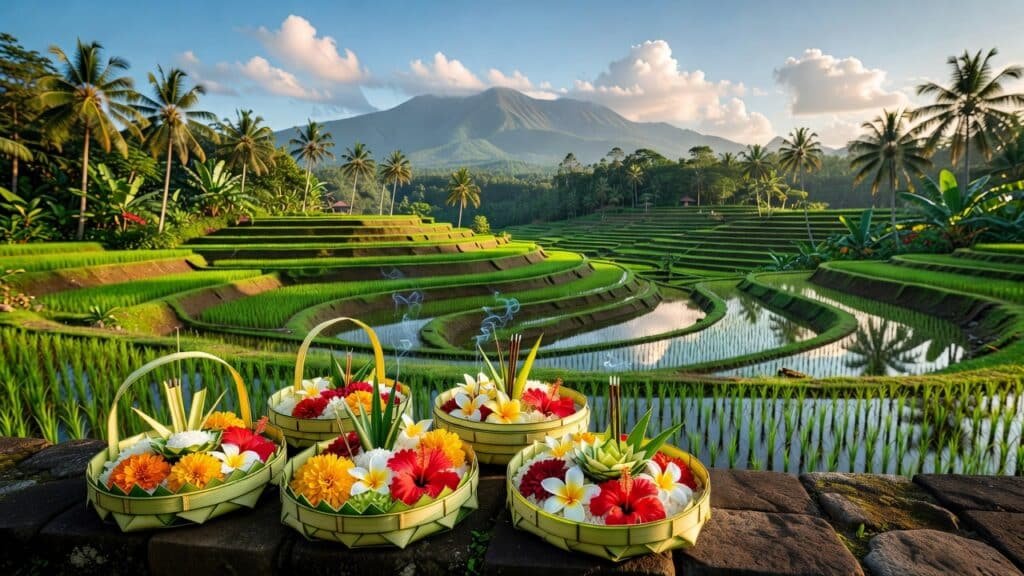
The canang sari, these small daily offerings, are an essential component of the Hindu Bali ritual. Every morning, and sometimes several times a day, Balinese people craft and place these baskets on temple altars, in front of their homes, businesses, or even in the street. A typical canang sari is a small square box made of palm leaf, often decorated with woven coconut leaves. Inside, one finds a harmony of colors and fragrances: petals of Bali flowers (often yellow marigolds, white frangipanis, red hibiscus, and jasmine flowers) which form the heart of this beautiful flower offering, symbolizing the deities Brahma, Vishnu, and Shiva. Rice, biscuits, sometimes a pinch of salt or coffee, and a small lit incense stick complete the Bali offering, whose smoke is believed to carry prayers to the heavens. The crafting of these offerings is an art passed down through generations, and it’s possible to purchase them at local markets for approximately 5,000 to 10,000 IDR each, although many prefer to create them themselves. Observing this ritual is an authentic experience, particularly in places like the traditional village of Penglipuran or around temples like Tirta Empul.
Practical Tips for Interacting with Offerings
- Respect the Sacred Space: Offerings are objects of devotion. Do not touch them, move them, and especially, do not step on them.
- Observe Discreetly: If you witness an offering ritual, do so with respect, maintaining a distance and avoiding interrupting those practicing.
- Mind the Locations: Canang sari are often placed on the ground, at entrances, or on steps. Be mindful of where you walk to avoid accidentally damaging them.
- Photograph Courteously: If you wish to take photos, ask for permission if people are directly involved in the ritual, and be discreet.
- Learn the Meaning: Informing yourself about the symbolism of the colors and elements will allow you to appreciate the cultural richness of these offerings even more.
Comparative Table: Types of Offerings and Their Significance
| Type of Offering | Description | Main Significance | Estimated Cost (IDR) |
|---|---|---|---|
| Canang Sari | Small woven palm leaf basket, flowers, rice, incense. | Daily offering to the gods, gratitude, and purification. | 5,000 – 10,000 |
| Banten Saiban | Simple offering of cooked rice, salt, and water, often on a banana leaf. | Offering to earth spirits and demons for appeasement. | 2,000 – 5,000 |
| Gebogan | Large tower of fruits, cakes, and flowers, carried on the head. | Elaborate offering for major temple ceremonies. | 200,000 – 1,000,000+ |
FAQ about Bali Offerings Canang Sari
What does the canang sari symbolize for the Balinese?
The canang sari symbolizes balance and gratitude. Each element has its place and meaning: the flowers represent the deities (Brahma, Vishnu, Shiva), rice is a symbol of life and nourishment, incense carries prayers upwards, and the shape of the basket itself evokes devotion and humility. It is a way to express their gratitude for peace and prosperity, while also appeasing negative spirits and maintaining harmony with the cosmos.
Why are Bali offerings so important in daily life?
Offerings, and particularly the canang sari, are fundamental because they are a constant expression of Dharma, the righteous path. They remind the Balinese of their daily coection with the divine and the need to maintain balance between the forces of good and evil. This daily Bali ritual is not just a religious obligation, but also a meditative and creative act that anchors spirituality in everyday life, even amidst the hustle and bustle of a local market.
Can tourists participate in making or placing canang sari?
While the crafting of canang sari is generally reserved for Balinese women, some cultural workshops or hotels offer introductions to their creation. This is an excellent way to understand the process and meaning behind these offerings. As for placing them, it is preferable to observe and respect rather than directly participate, unless specifically invited to do so during a temple ceremony or by locals. Purchasing a canang sari is a lovely way to support the local economy and appreciate this art, and can even make an excellent Bali souvenir.
Conclusion
Bali offerings, and particularly the canang sari, are a reflection of Bali’s soul, an island where spirituality is not confined to temples but flourishes in every aspect of daily life. Observing these rituals, understanding their meaning, and respecting them will significantly enrich your travel experience. They are a constant reminder of the beauty of devotion and the importance of harmony. To discover even more cultural and spiritual wonders of this enchanted island, start plaing your adventure with Salut Bali today!