Bali, the Island of the Gods, is renowned for its idyllic beaches, majestic temples, and vibrant culture. But beyond the postcard-perfect landscapes, the island holds a unique and fascinating culinary experience: the discovery of the famous Luwak coffee. Join us as we delve into the mysterious and intriguing world of a Bali coffee Luwak plantation, where tradition and nature intertwine to produce one of the world’s most expensive and sought-after coffees. Prepare for an unforgettable sensory journey that will awaken your taste buds and your curiosity. To plan your perfect stay, be sure to visit our comprehensive guide on Salut Bali.
Discovering a Bali Coffee Luwak Plantation: A Sensory Journey
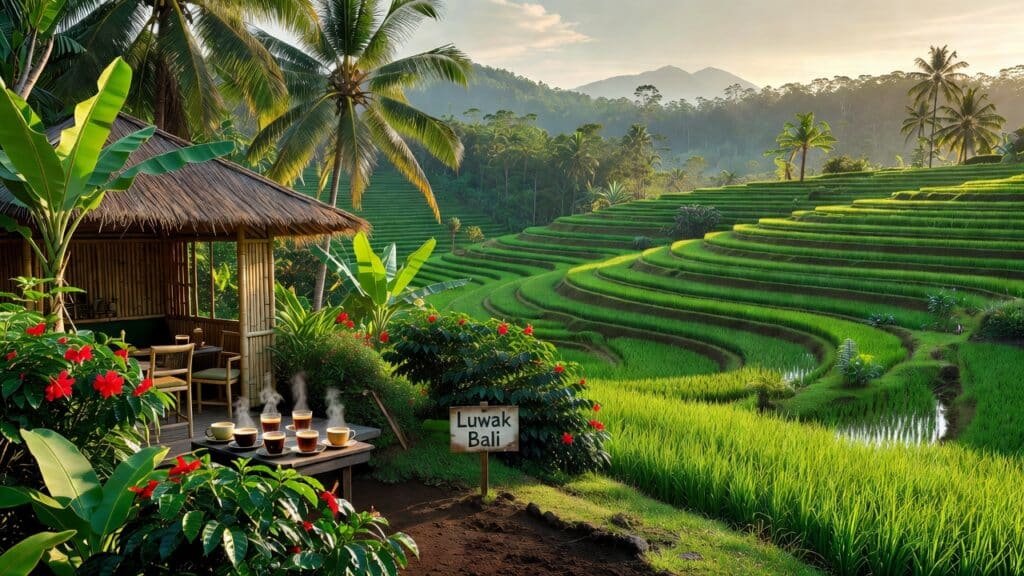
Visiting a Bali coffee Luwak plantation offers a complete immersion into the making of this exceptional beverage. Most of these plantations are nestled in Bali’s lush, mountainous regions, ofteear Ubud or Munduk, providing breathtaking views of terraced rice fields. Upon arrival, local guides will welcome you and explain each step, from cultivating coffee beans to roasting. You’ll discover how palm civets, small nocturnal mammals, play a crucial role by selecting and ingesting only the finest coffee cherries. It is this unique digestive process that gives kopi luwak its smooth flavor and distinctive aroma, with low acidity.
During your exploration, you’ll see the coffee beans, once excreted, cleaned, sun-dried, then hand-roasted and ground. Many Bali coffee plantations offer free tastings of a variety of local coffees and teas, such as the famous Balinese coffee, coconut coffee, and various herbal infusions. The price for a cup of Bali Luwak can vary, but expect to pay between 50,000 and 80,000 IDR (approximately 3-5 EUR) for a full tasting of pure Kopi Luwak. It’s an educational and flavorful experience that is well worth the detour.
Practical Tips for a Successful Visit
- Choose an ethical plantation: Ensure that civets are free-roaming or humanely treated, not confined to cages. Some plantations highlight animal-friendly practices.
- Allow plenty of time: A complete visit with tasting can take between 1.5 to 2 hours. Don’t rush, and take your time to enjoy the detailed explanation.
- Taste beyond Luwak: Take advantage of the free tastings to discover other local flavors, such as ginseng coffee or fruit teas.
- Buy on-site: If you wish to take home some Luwak coffee, buying it directly from the plantation guarantees authenticity and supports the local economy. But be prepared for the price!
- Combine with other activities: Plantations are often located in picturesque areas. Take the opportunity to visit nearby rice fields, temples, or waterfalls. For your travels, consult our guide on transport in Bali.
Comparison: Kopi Luwak vs. Other Balinese Coffees
To help you choose, here’s a comparative overview of the different coffees you might taste during your visit:
| Coffee Type | Process | Flavor Profile | Average Price (per cup in IDR) |
|---|---|---|---|
| Kopi Luwak | Civet-digested beans | Smooth, low acidity, earthy notes | 50 000 – 80 000 |
| Traditional Balinese Coffee | Classic roasting and grinding | Rich, full-bodied, slightly bitter | 15 000 – 25 000 |
| Flavored Coffee (Coconut, Vanilla) | Natural flavorings added | Sweet, flavored, mild | 20 000 – 35 000 |
FAQ about Bali Luwak Coffee
Is Kopi Luwak ethical?
Ethics are paramount. Ideally, Kopi Luwak comes from wild civets. Unfortunately, some farms exploit civets in captivity. Prioritize plantations that guarantee animal welfare, where civets are free-roaming or humanely treated. Do your research to support responsible sources and avoid questionable practices.
What does Kopi Luwak taste like?
Kopi Luwak is renowned for its exceptionally smooth taste and low acidity, making it very digestible. It features complex notes, often earthy, chocolatey, or caramel-like, with a rich and deep aroma. Its creamy texture offers a distinct tasting experience, highly valued for its uniqueness and lack of bitterness.
Where can I find the best Bali Luwak coffee plantations?
The regions of Ubud, Munduk, and Kintamani boast numerous plantations. Satria Coffee Plantatioear Ubud is popular for its educational approach. Also look for smaller family-run farms in mountainous areas. Ask your hotel or guide for recommendations to find an authentic and animal-friendly Bali coffee Luwak plantation.
💡 Discover Bali with our all-inclusive excursions. Book your tour in Bali. En savoir plus →
Conclusion: An Unmissable Balinese Experience
Visiting a Bali coffee Luwak plantation is much more than just a coffee tasting; it’s a cultural and sensory immersion into the heart of Balinese tradition. Between discovering lush landscapes and being introduced to the secrets of Kopi Luwak, this experience will remain etched in your memories. Remember to approach this discovery with curiosity and an ethical mindset. Ready to explore Bali and its wonders? Plan your adventure today with Salut Bali for an unforgettable journey.