Introduction to Batik Bali Handicraft
Bali, the Island of the Gods, is a jewel box of natural beauty and spirituality. Yet, beyond its idyllic beaches and terraced rice fields, it harbors an invaluable cultural treasure: its handicrafts. At the heart of this richness, batik Bali handicraft stands out as an ancient form of artistic expression, bearing witness to the creative Balinese soul. Every motif, every color, tells a story, a tradition, a deep coection with the island’s spirituality and nature. For a complete immersion in this fascinating culture, begin your adventure by exploring our guides on salutbali.com/voyage-bali/.
Detailed Guide to Balinese Batik Art
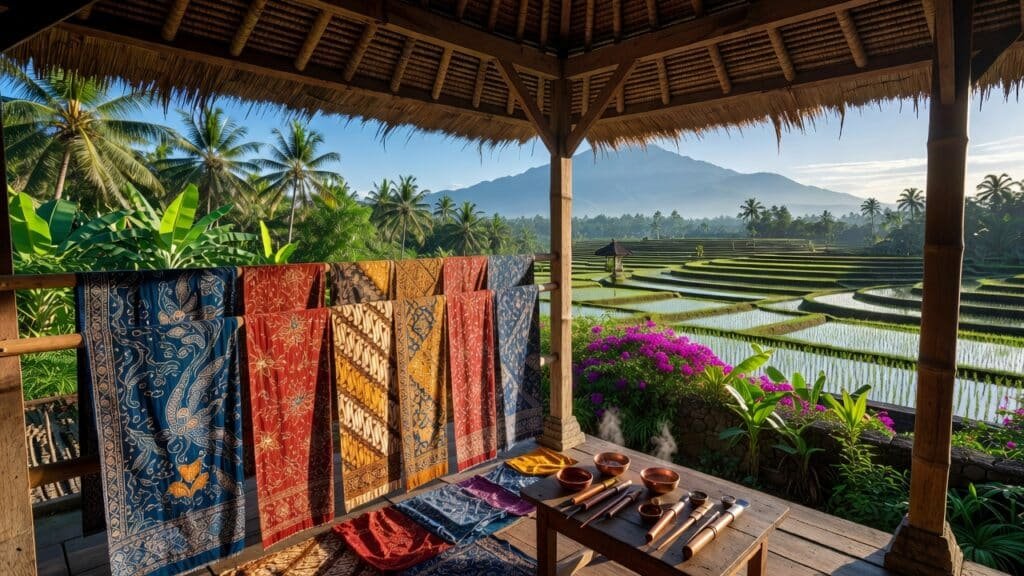
Batik is much more than just a fabric; it is an intricate wax-resist dyeing technique applied to cloth, a meticulous art form passed down from generation to generation. The island is dotted with dedicated centers where visitors caot only admire but also actively participate in the creative process. In Tohpati, near Denpasar, numerous workshops offer demonstrations and pieces of exceptional quality. Ubud, Bali’s artistic heart, also provides unique experiences. A typical batik workshop Bali will immerse you in discovering the secrets of batik painting, utilizing the “canting” (a small copper tool for applying hot wax) or the “cap” (a copper stamp for creating repetitive patterns). You will learn to create your own designs, from conception to dyeing. The process is fascinating: after the wax application, the fabric is dipped into successive dye baths, with the wax acting as a barrier for the uncolored areas. Once the wax is removed, the intricate and vibrant patterns emerge. While batik focuses on dyeing after weaving, weaving Bali, particularly ikat, is another technique where threads are dyed before being woven, creating a unique Bali textile. Prices for a half-day workshop generally range between 300,000 and 600,000 IDR (approximately 20-40 EUR), and typically include all materials along with your unique take-home creation.
Practical Tips for Exploring Batik in Bali
- Choose the right workshop: Seek out reputable centers such as those in Tohpati or explore smaller, family-run workshops in Ubud. Reading online reviews is highly recommended to ensure an authentic and enriching experience.
- Allow ample time: A batik Bali handicraft workshop can typically last anywhere from 2 to 4 hours. This is a meditative activity that demands patience and concentration, so it’s best not to rush the process.
- Negotiate with respect: While negotiation is common when purchasing pieces, always do so with a smile and a deep respect for the artisan who has poured their heart and soul into their work.
- Explore the motifs: Each motif has a deep meaning, often linked to Balinese mythology or nature. Don’t hesitate to ask the artisans about the story behind their creations.
- Combine with other visits: A batik workshop can be integrated into a day of exploring traditional Balinese villages or local markets for a complete cultural immersion.
Comparative Table of Batik Types
| Type of Batik | Characteristics | Price Range (IDR) | Completion Time |
|---|---|---|---|
| Batik Tulis (Hand-drawn) | Entirely hand-drawn with canting, unique and complex motifs. | 200,000 – 5,000,000+ | Several days to months |
| Batik Cap (Stamped) | Repetitive motifs using copper stamps (cap), faster production. | 100,000 – 1,500,000 | A few hours to days |
| Combined Batik | Mix of tulis and cap techniques, offering a balance between uniqueness and efficiency. | 150,000 – 3,000,000 | A few days |
| Imitation Batik (Printed) | Mechanically printed motifs, without wax or manual dyeing. | 50,000 – 300,000 | A few minutes |
FAQ about Balinese Batik
What makes Balinese batik unique?
Balinese batik distinguishes itself through its motifs, which are often inspired by the island’s lush nature (flowers, animals, landscapes) and its rich Hindu mythology. In contrast to Javanese batik, which tends to be more rigid and symbolic, Balinese batik is frequently characterized by a freer, more colorful, and expressive style, truly reflecting the artistic and joyful spirit of the Balinese people. It sometimes incorporates elements of Balinese offerings or vibrant dance scenes.
Where can I buy authentic batik in Bali?
To purchase authentic batik, it is advisable to prioritize artisan workshops in Tohpati, Mas, or Ubud. There you will not only find quality pieces but often be able to observe the intricate manufacturing process firsthand. Handicraft markets like Ubud Market or Sukawati also offer a vast selection, but exercise caution regarding printed imitations and do not hesitate to negotiate prices respectfully.
Can I machine wash my batik?
It is generally recommended to hand wash batik in cold or lukewarm water with a mild soap to meticulously preserve the colors and texture of the fabric. Avoid using bleach and machine drying, as these can severely damage the delicate fibers and intricate motifs. Always dry it in the shade to prevent fading from direct sunlight exposure.
Conclusion
The art of batik Bali handicraft serves as an open window into the creative and spiritual soul of the island. Participating in a batik workshop Bali or acquiring an authentic piece means taking a cherished fragment of this vibrant culture and its milleia-old history with you. Don’t miss this enriching experience during your stay. Prepare your trip and discover all the wonders Bali has to offer by visiting salutbali.com/voyage-bali/.