The Cremation Ceremony in Bali: An Unforgettable Spiritual Journey
Introduction
Bali, the Island of the Gods, is renowned for its vibrant spirituality that permeates every aspect of life, including death. Far from being a somber event, death is perceived as an essential stage in the cycle of life, a transition towards the next incarnation. At the heart of this philosophy lies the spectacular cremation ceremony Bali, an event both solemn and joyful that fascinates visitors. Attending this rite is a unique opportunity to delve into the richness of Balinese culture and understand its profound vision of existence. Prepare to discover an unforgettable aspect of your trip to Bali with Salut Bali.
Detailed Guide: Understanding the Cremation Ceremony Bali
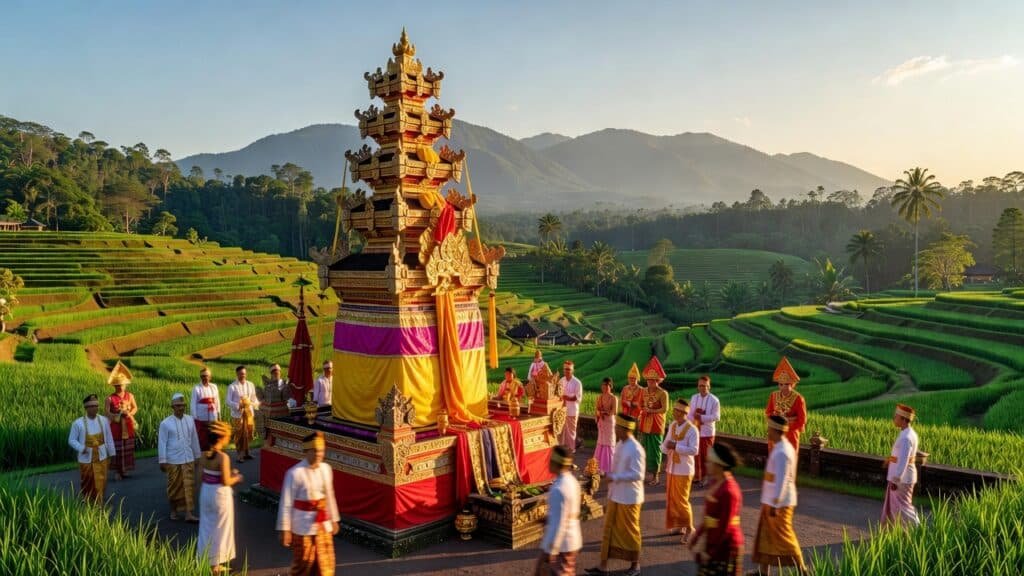
The cremation ceremony Bali, or Ngaben, is the most significant funeral rite on the island. Far from being a simple Bali cremation, it is a complex and colorful community event, reflecting the profound Balinese Hindu spirituality. The Ngaben does not take place immediately after death. Bodies are often temporarily buried until the family has the means and the opportune moment to organize a collective ceremony, sometimes years later. On the designated day, the deceased, wrapped and placed in a sarcophagus shaped like a mythical animal (bull, lion), is transported in an imposing cremation tower, the bade, to the cremation site.
The procession is a spectacle in itself: hundreds of people, dressed in their finest sarongs, accompany the deceased to the vibrant sound of the gamelan and ritual chants. Traditional dances can enhance this funeral ceremony Bali, transforming it into a celebration of passage. Floral and food offerings abound. This Balinese rite is a liberation of the soul from the physical body, allowing it to continue its spiritual journey.
Practical Tips for Attending a Ngaben
To experience this unique cremation ceremony Bali with respect and understanding, here are some essential tips for travelers:
- Respect local customs: Dress modestly (shoulders and knees covered) and wear a sarong and sash (often lent or sold on-site). Never walk in front of a priest or an offering.
- Be discreet and silent: Observe from a distance and avoid interrupting the proceedings. Always ask for permission before taking close-up photos, especially of family members.
- Do not touch the deceased or the sarcophagus: This is a sacred and very personal act for the family.
- Inquire about the schedule: Collective cremations are aounced locally. Ask your hotel, guides, or locals for dates and locations.
- Understand the meaning: Approach the ceremony with an open mind, understanding that it is a celebration of life and not a sad event, but a joyful passage.
Comparative Table: Types of Cremations in Bali
Bali cremation comes in various forms, reflecting the traditions and means of families. Here’s an overview:
| Type of Ceremony | Description | Frequency / Estimated Cost (IDR) |
|---|---|---|
| Individual Ngaben | Organized by a single family for one deceased. Expensive and less frequent. | Variable, starting from 50,000,000 IDR |
| Massal Ngaben (Collective) | Several families share the costs and ritual. Very common. | Aual or bi-aual, starting from 5,000,000 IDR / family |
| Ngaben for Kings/Nobles | Grand ceremonies with richly decorated towers and sarcophagi. | Very rare, several hundred million IDR |
FAQ about the Cremation Ceremony in Bali
When and where can you attend a cremation ceremony?
Individual Ngaben ceremonies are unpredictable. Collective cremations (Ngaben Massal) are often aounced several weeks in advance and take place in large villages or towns like Ubud or Denpasar, usually during the dry season. Inquire with locals, your guide, or your accommodation for dates. There is no fixed tourist calendar.
Is it appropriate to take photos or videos?
Yes, it is generally tolerated, but with the utmost discretion and respect. Avoid flash and positioning yourself directly in front of participants or the family. Always ask for permission if you wish to photograph people up close, especially the grieving family. Respect for the Balinese is paramount.
What is the spiritual purpose of Ngaben?
The Balinese rite of Ngaben aims to free the soul from the physical body and earthly attachments. This allows it to reincarnate or achieve moksha (liberation from the cycle of reincarnations). Fire is a sacred purifier, and the ceremony is essential for the soul’s journey to its next spiritual stage, in accordance with Balinese Hindu spirituality.
Conclusion
The cremation ceremony Bali is much more than a mere funeral event; it is a vibrant celebration of life, death, and the eternal cycle of existence. Attending a Ngaben offers a unique perspective on the island’s spiritual and cultural richness. It is an experience that leaves a lasting impression and deeply enriches any trip to Bali. To discover other facets of this magical island and organize your unforgettable stay, explore Salut Bali’s guides and offers today!