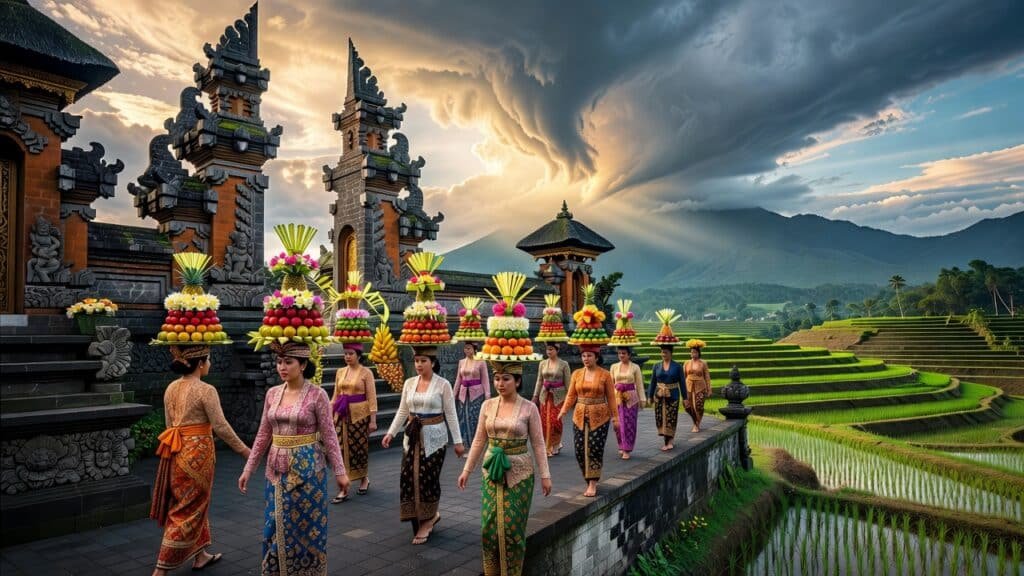
Bali Temple Ceremony: A Spiritual Immersion in the Heart of the Island of the Gods
Bali, the Island of the Gods, is far more than a dream destination with idyllic beaches and lush terraced rice fields. It’s a place where spirituality permeates every aspect of daily life, and where ancestral traditions are vibrant and palpable. At the heart of this vibrant culture are countless rituals and the magnificent Bali temple ceremony. These sacred events offer a unique window into the Balinese soul, a profound experience that goes far beyond mere tourism. If you dream of a trip to Bali that touches the essence of this mystical island, explore our offers on Salut Bali for total immersion. Prepare to be amazed by the fervor and beauty of these celebrations.
Detailed Guide to Balinese Ceremonies
Attending a Balinese ceremony is a privilege and an unforgettable experience. These events, often called “Odalan” when they celebrate the aiversary of a Bali pura (temple), are explosions of color, sound, and fervor. Every temple, from the majestic Pura Besakih to the picturesque Tanah Lot, regularly hosts such celebrations. Balinese people, dressed in their finest sarongs and kebaya, carry baskets filled with elaborate Bali offerings, composed of flowers, fresh fruits often sourced from Bali’s organic markets, rice, and incense. These offerings, called “Canang Sari,” are placed with devotion at the feet of the deities. You will see priests, the “Pedanda,” reciting mesmerizing mantras, while the sound of gamelans (traditional orchestras) fills the air. For a respectful immersion, it is possible to attend these rituals from the public areas of the temples, often for a symbolic entrance fee (approximately 20,000 to 60,000 IDR, or 1.5 to 4 euros, depending on the temple). Sometimes, local guides can explain the subtleties of the rituals. Don’t miss this opportunity to discover the beating heart of the Bali temple.
Practical Tips for Attending a Ceremony
To fully and respectfully enjoy a temple ceremony Bali, here are some essential tips:
- Dress respectfully: Wear a sarong (available at temple entrances) and a sash around your waist. Shoulders and knees must be covered.
- Be discreet: Observe from a distance, do not cross processions or prayer areas. Avoid standing higher than the priests or worshippers in prayer.
- Ask before photographing: While most Balinese are tolerant, a nod or a “permisi” (excuse me) is always appreciated before taking photos, especially of people.
- Respect offerings: Never step on Canang Sari placed on the ground. They are sacred.
- Inquire locally: Ask your hotel or a local guide about the dates and locations of important ceremonies during your stay.
Comparative Table of Major Balinese Ceremonies
Discover the main characteristics of various spiritual events in Bali:
| Type of Ceremony | Main Description | Frequency / Period | Typical Locations |
|---|---|---|---|
| Odalan | Aiversary of a temple’s (pura) founding | Every 210 days (Balinese Pawukon calendar) | All temples (Pura Besakih, Pura Tirta Empul) |
| Ngaben | Funeral cremation ceremony | Irregular, can be collective and costly | Villages, community centers |
| Melasti | Purification before Nyepi (Balinese New Year) | A few days before Nyepi (March/April) | Beaches (Sanur, Seminyak), water sources |
FAQ on Bali Temple Ceremonies
Can tourists actively participate in a Balinese ceremony?
Generally, tourists are invited to observe ceremonies from a respectful distance. Active participation, such as entering ier prayer areas, is reserved for Balinese worshippers. However, some cultural centers may offer introductory workshops to make offerings or dress in traditional attire. Inquire with your guide or accommodation about these unique opportunities.
What is the best time to attend a Bali temple ceremony?
Ceremonies take place throughout the year in Bali, following the Balinese calendars. Therefore, there isn’t one “best” unique period. The dry season (April to October) is often more pleasant for travel. The easiest way is to check ceremony calendars upon arrival or ask locals. Major events like Nyepi, Galungan, and Kuningan are particularly intense and significant times.
Where can I buy souvenirs related to ceremonies or Balinese spirituality?
After experiencing a ceremony, you might want to take a souvenir home. Local markets, like those in Ubud or Denpasar, are filled with handcrafted items, incense, and traditional fabrics. For more refined pieces, Ubud silver jewelry are magnificent testimonies to local craftsmanship. Feel free to explore options to find the best Bali souvenir, but remember that the true richness is the experience itself.
Conclusion: Dive into the Heart of Balinese Spirituality
Bali temple ceremonies are the beating heart of the Island of the Gods, offering a profound immersion into a rich culture and omnipresent spirituality. Attending these rituals is a transformative experience, a powerful reminder of the beauty of tradition and devotion. Don’t miss this unique opportunity to coect with the soul of Bali. To plan your trip and discover all facets of this magical island, visit Salut Bali now and start your unforgettable adventure.