Traveling to Southeast Asia remains an absolute dream for Francophone travelers seeking exoticism, spirituality, and breathtaking landscapes. The sculpted rice terraces, majestic mist-covered volcanoes, and legendary hospitality of its people make this archipelago a must-visit destination. However, facing recent legislative changes and the geological realities of the region, a legitimate question arises before packing your bags: is making Indonesia a safe destination in 2026 a reality for your next tailor-made vacation?
For travelers coming from France, Belgium, Switzerland, or Quebec, the archipelago has successfully modernized its infrastructure and strengthened the protection of international visitors. Whether you plan to explore sacred temples, relax on secret beaches, or venture deep into a lush jungle, preparation remains the key to your peace of mind. This comprehensive guide provides you with all the factual answers, regulatory updates, and essential Indonesia travel advice to explore this paradise with complete serenity.
Overall Safety: Is Indonesia a Safe Destination in 2026?
From a statistical and factual standpoint, Indonesia stands out as one of the safest countries in Southeast Asia for tourists. The violent crime rate is extremely low, much lower than that observed in most major Western cities. Physical assaults deliberately targeting foreign travelers are exceptionally rare. This pervasive safety is largely explained by the cultural and religious fabric of the country, where respect for guests and collective benevolence (the concept of Gotong Royong, or mutual assistance) guide the daily lives of the locals.
To sustain this positive dynamic, the government has officially launched the Tourism Safety Program 2026. This nationwide initiative, orchestrated by the Ministry of Tourism, imposes strict safety standards across all tourism infrastructure. It includes advanced first-aid training for local professionals, optimization of environmental risk management systems, and an increased deployment of the tourist police (Polisi Pariwisata) at major sites across the archipelago.
However, the absence of major crime should not excuse a lack of basic vigilance against opportunistic delinquency. Snatch theft, pickpockets in crowded markets, and ATM card skimming attempts are the main reported inconveniences. To protect yourself from these risks, always favor ATMs located inside official bank branches and keep your valuables in the safe of your premium accommodation.
—
New Administrative and Customs Regulations in 2026
The year 2026 marks a major turning point in the digitization and securing of Indonesian borders. Authorities have centralized all entry formalities to streamline the arrival of travelers while effectively combating administrative fraud and illegal visa agencies.
The Molina Portal: Mandatory Digital Registration
From now on, any international traveler entering Indonesian territory by air, sea, or land must register via the consolidated official platform: the Molina Portal (accessible on the government website allindonesia.imigrasi.go.id). This unified system replaces the old paper immigration forms, health declarations, and customs documents.
This entirely free online registration must be completed within 72 hours prior to your flight. It requires you to submit your passport information, flight details, and a basic health declaration. Upon validation of the form, the system generates a unique QR code that you should save on your smartphone or print. This code will be scanned multiple times as you cross the borders, ensuring a smooth, transparent, and secure control process.
The Penal Code (KUHP) and Absolute Respect for Local Laws
Indonesia enforces its national laws with absolute strictness, and ignorance is never accepted as an excuse by local authorities. The regulations implemented by the new Penal Code (KUHP) impose strict penalties, which can include immediate deportation and a permanent ban from entering the country for any outrage against state institutions, insults to authorities, or behavior deemed deeply disrespectful to local traditions and religion.
Furthermore, legislation regarding narcotics remains among the most repressive in the world. The possession, consumption, or transport of drugs, even in minute quantities, leads to heavy prison sentences and is subject to the death penalty in cases of trafficking. Also, be vigilant with your electronic cigarettes or vapes: never buy unsealed e-liquids from street vendors, as police checks have intensified in 2026 to eradicate modified illicit substances.
| Region / Island | Global Safety Index | Specific Vigilance Points |
|---|---|---|
| Bali | Excellent | Scooter traffic, pickpockets in nightclubs, respect for sacred temples. |
| Java | Very High | Vigilance during nighttime city travel, respect for modest dress codes. |
| Lombok & Gili | Very High | Inter-island maritime transport, scams involving local artisanal alcohol. |
| Sumatra | Good / Moderate | Isolation during jungle treks, winding secondary roads, strict legislation in Aceh. |
| Sulawesi (Celebes) | Very High | Mountainous inland regions, scrupulous respect for funeral rituals in Tana Toraja. |
| Komodo National Park | Excellent | Ocean currents during dives, strict adherence to ranger instructions regarding monitor lizards. |
—
Transport, Scooters, and Road Safety: Traps to Avoid
The main physical risk factor for a traveler in Indonesia does not stem from crime, but rather from road accidents. The road networks of the major islands suffer from constant congestion, and traffic laws are applied in a highly improvised manner by local users.
Riding Two-Wheelers: The End of Impunity
For many years, the Indonesian islands were perceived as a playground without rules for renting two-wheelers. In 2026, this era is definitively over. The national police apply a zero-tolerance policy against foreign tourists violating the rules of Bali safety 2026 and the rest of the country.
To ride a scooter legally and safely, you must hold a valid International Driving Permit (IDP), necessarily accompanied by your national driving license showing the corresponding category (A1 or A). Wearing a certified and fastened helmet is mandatory for both the driver and the passenger. Any breach of these rules results in substantial fines, immediate confiscation of the vehicle, and, most importantly, the immediate cancellation of your travel insurance. In the event of an accident without the proper license, all hospitalization or repatriation costs will be your sole responsibility.
Favoring Professional Transport Solutions
For your urban or intercity travel across major destinations like the island of Java or the bustling coasts of the archipelago, avoid improvised and unregistered street drivers. Always prioritize the use of official and highly secure ride-hailing applications such as Grab or Gojek, or use the famous Blue Bird taxis, renowned for their absolute honesty and systematic use of the taximeter.
Regarding fast maritime connections—for example, to reach the Lombok and Gili islands from the Balinese coast—ensure you book exclusively with reputable maritime companies featuring modern boats that are regularly inspected and equipped with enough life jackets for all passengers.
—
Natural Risks and Health in Indonesia
Positioned on the famous Pacific “Ring of Fire,” Indonesia experiences a significant share of the world’s seismic and volcanic activity. Far from warranting irrational panic, this geological reality simply requires rigorous preparation and close attention to the authorities.
Monitoring Seismic and Volcanic Activity
Low-magnitude earthquakes and sporadic volcanic eruptions are part of life in the archipelago and shape its dramatically beautiful landscapes. In 2026, Indonesia’s scientific monitoring networks (PVMBG) are among the most efficient in the world. Clear safety perimeters are instantly drawn around active craters (such as Mount Agung or Mount Bromo). It is imperative to strictly respect these exclusion zones and follow local weather and geological bulletins broadcast in real time.
Preventing Health Risks: Water and Food
The issue of Indonesia health insurance is at the heart of a successful trip. The most frequent health risk remains the famous “Bali Belly,” acute gastric distress usually caused by a change in bacterial environment or the ingestion of non-potable water. To protect yourself, never consume tap water, refuse ice cubes in rudimentary street establishments, and wash your hands regularly with hydroalcoholic gel. In premium hotel complexes and restaurants selected by a local agency, hygiene meets the highest international standards.
Extreme caution must be paid to the consumption of artisanal alcohol. Severe cases of methanol poisoning occur regularly following the ingestion of adulterated palm wine (smuggled local arak). For your safety, exclusively consume sealed, industrially branded alcoholic beverages served in trusted establishments with an excellent reputation.
Finally, ensure your basic vaccinations (Hepatitis A, Typhoid, Tetanus) are up to date. For prolonged stays in the heart of rural or wild areas of Sumatra or Sulawesi, prior consultation with a doctor specializing in tropical medicine regarding vaccination against Japanese encephalitis or a preventive treatment against malaria is strongly recommended.
—
Expert Tips for Traveling with Complete Peace of Mind
The organization of your stay largely determines your level of safety and the smoothness of your experience on the ground. Applying a few fundamental rules will allow you to avoid all the classic pitfalls.
Solo Travel in Indonesia: What is the Reality on the Ground?
If you plan on solo travel in Indonesia, and especially if you are a solo female traveler, you will discover a country that is generally very protective and respectful. Aggressive street harassment is virtually nonexistent. Locals will be benevolent and protective toward you. However, particular attention should be paid to your attire when visiting religious buildings or traditional villages off the beaten path: covering your shoulders and knees (using a traditional sarong) is an essential mark of respect that will spare you disapproving looks or uncomfortable situations.
The Crucial Importance of a French-Speaking Travel Agency in Indonesia
The absolute best way to eliminate any source of logistical or security stress is to entrust the design of your itinerary to a French-speaking travel agency in Indonesia. A local expert has precise, real-time updated knowledge of the security, political, and weather situation of each island. In the event of a climatic hazard or an unexpected change to your flight, a responsive local agency instantly reorganizes your transfers and overnight stays without you having to suffer the inconveniences.
Furthermore, traveling under the guidance of certified private drivers and professional French-speaking local guides naturally isolates you from scam attempts, tourist traps, and the risks associated with driving on Indonesian roads. It is the guarantee of an exceptional stay combining cultural authenticity and absolute peace of mind.
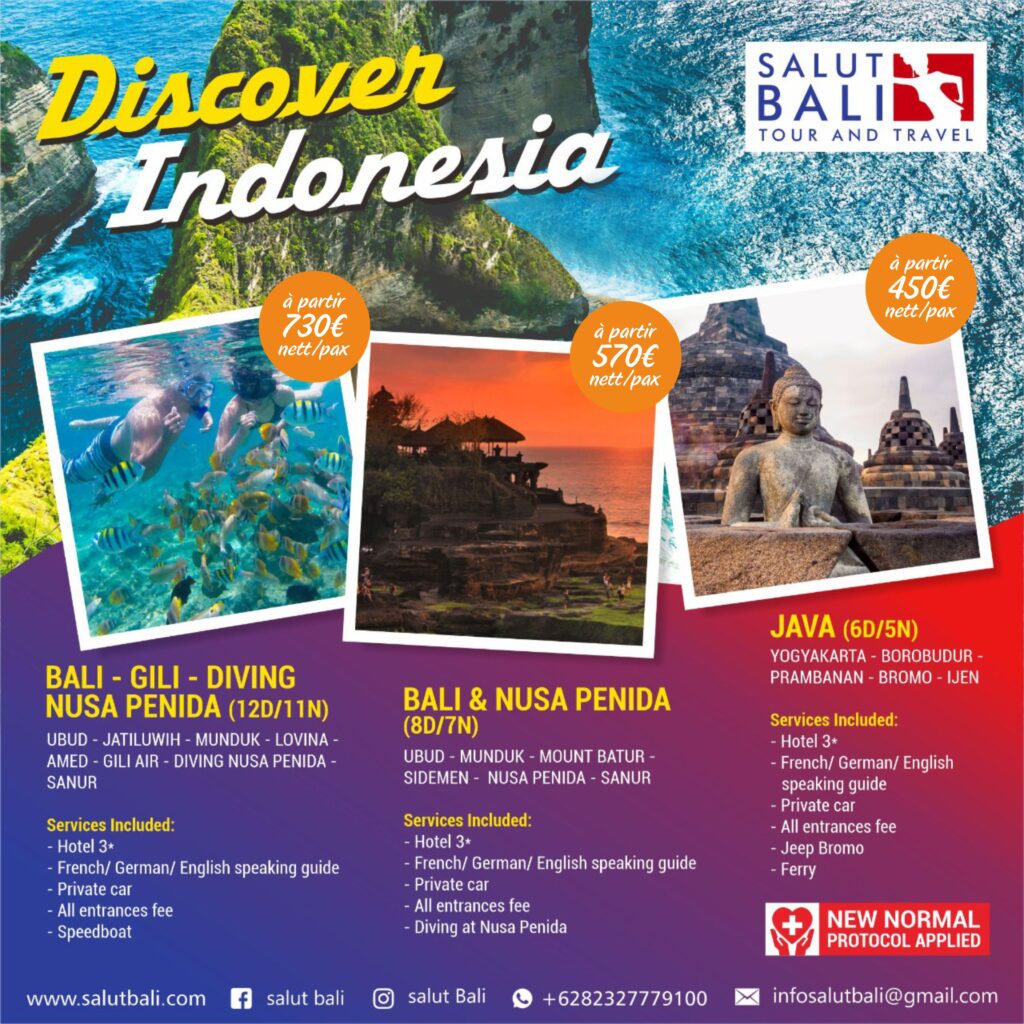
Contact Salut Bali today to create your tailor-made trip to Indonesia with an experienced French-speaking local agency.
—
Frequently Asked Questions (FAQ) on Safety in Indonesia in 2026
Is Indonesia safe for a family trip with children?
Yes, Indonesia is a particularly welcoming destination for families. Indonesians love children and will go out of their way to make your daily life easier. Animal parks, supervised outdoor activities, and premium hotel facilities offer a perfectly adapted and secure environment for the youngest travelers.
Can we eat street food (Warung) safely?
Local cuisine in small traditional restaurants called Warungs is delicious and economical. To consume it safely, apply a golden rule: choose establishments that are highly frequented by locals and families, an undeniable sign of absolute freshness and constant product turnover.
What to do in case of a serious medical emergency during the stay?
In major urban and tourist centers like southern Bali or Jakarta, you will find excellent international hospitals (such as BIMC or Siloam) with English and French-speaking medical staff. It is essential to have taken out travel insurance in advance that covers upfront high medical costs and medical repatriation.
Are the internet network and mobile coverage reliable for safety?
Mobile coverage in Indonesia is excellent in 2026, including in rural areas thanks to the massive deployment of 4G and 5G. We advise you to install a local eSIM card upon your arrival. Having a permanent internet connection will allow you to use secure transport apps, geolocate yourself, and stay in constant contact with your local travel advisor.
Are there any political tensions or areas to avoid in 2026?
The classic tourist areas covered by our tours (Bali, Java, Lombok, Sumatra, Celebes, Komodo) enjoy perfect political stability. Only the ultra-peripheral and non-tourist regions of the Papua province experience local geopolitical tensions and are the subject of an avoidance recommendation by Western foreign ministries—territories where no prestigious agency offers itineraries.