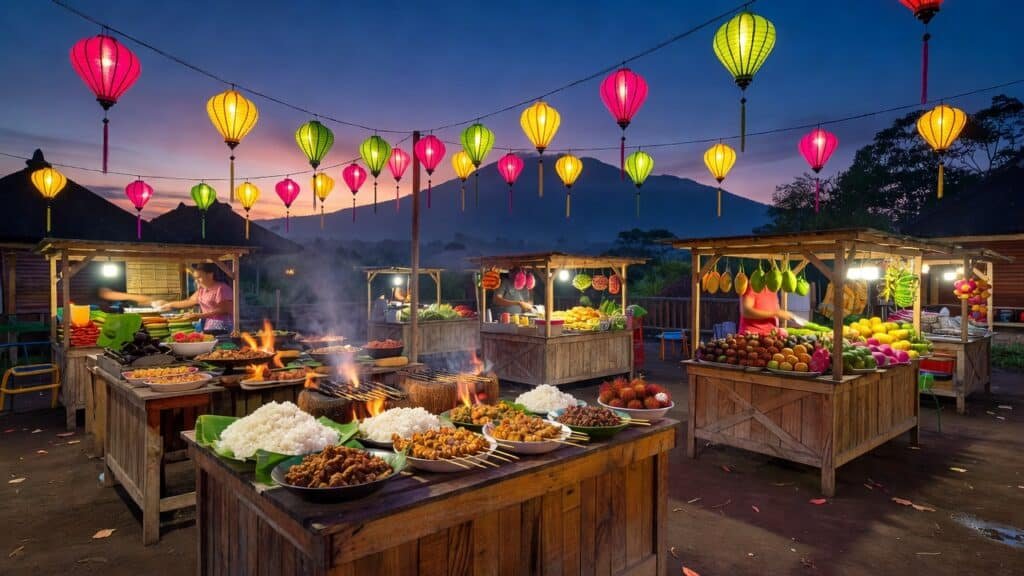
Discover the Magic of Bali’s Night Markets: A Feast for the Senses
Bali, the Island of the Gods, is renowned for its breathtaking landscapes, majestic temples, and idyllic beaches. Yet, beyond its postcard-perfect scenery, the island harbors a culinary treasure that truly comes alive as night falls: the vibrant Bali night market food scene. Far removed from typical tourist restaurants, these traditional markets serve as the beating heart of local culture, offering an authentic immersion into Balinese daily life and an explosion of flavors for your taste buds. Prepare yourself for an unforgettable gastronomic adventure that will awaken all your senses. To begin plaing your exploration of this enchanting island, don’t hesitate to visit SalutBali.com and discover how to organize the trip of your dreams.
A Detailed Bali Night Market Food Guide
Exploring a pasar malam Bali is much more than a simple quest for sustenance; it’s a vibrant cultural experience in itself. As soon as the sun dips below the horizon, these markets illuminate with colorful garlands and fill the air with the enticing aromas of grilled skewers, exotic spices, and delectable sweet treats. The Gianyar night market, for example, stands out as an absolute must-visit. Known locally as the “Gianyar night market” (secondary keyword), it is highly regarded for its incredible diversity and genuinely authentic atmosphere. Here, you’ll discover countless stalls overflowing with freshly prepared dishes, ranging from the universally famous Nasi Goreng (fried rice) and Mie Goreng (fried noodles) to succulent Satay skewers (marinated and grilled chicken, beef, or pork, typically served with a rich peanut sauce). The night market food is incredibly affordable, with most main dishes generally costing between 20,000 and 50,000 IDR (approximately 1.20€ to 3€). Be sure not to miss the Martabak, a thick sweet or savory pancake, or Bakso, a comforting and flavorful meatball soup. This is truly the ideal spot to sample authentic Bali night street food, and for a more comprehensive exploration of street food culture, take a look at our dedicated guide on Bali’s street food and night markets. You’ll also learn how Balinese locals enjoy their meals in local warungs, small traditional eateries often found within these bustling market settings.
Practical Tips for Making the Most of Your Experience
- Arrive Early: To effectively avoid the biggest crowds and ensure you have the widest selection of food, aim to arrive just after sunset.
- Taste Everything: Don’t hesitate to try small portions of various dishes. This is your prime opportunity to discover exciting new flavors and local specialties.
- Carry Small Bills: Most vendors at these markets only accept cash payments, and having smaller denominations on hand will make transactions much smoother.
- Be Adventurous: Allow yourself to be tempted by dishes you’re unfamiliar with. It’s often in these unexpected culinary choices that the best and most memorable surprises are found.
- Check for Hygiene: Always choose stalls where the food is visibly prepared in front of you and where there is a clear, rapid turnover of dishes, indicating freshness.
Comparative Table of Balinese Night Markets
| Market Name | Specialties | Average Price (IDR) | Atmosphere |
|---|---|---|---|
| Gianyar Night Market | Babi Guling, Sate Lilit, Martabak | 25 000 – 50 000 | Authentic, local, lively |
| Badung Market (Denpasar) | Fresh fruits, spices, traditional dishes | 20 000 – 45 000 | Large, varied, very local |
| Kuta Night Market | Grilled seafood, Nasi Campur | 30 000 – 60 000 | Touristy, friendly, more modern |