Indonesia hides cultural treasures of unsuspected depth, far beyond the typical tropical paths. Among them, Toraja Land travel, set in the highlands of Sulawesi island, offers one of the most profound and memorable experiences a traveler can encounter. This mystical region, nestled amidst lush landscapes and terraced rice fields, is home to the Toraja people. Globally renowned for its preserved ancestral culture and unique Toraja funeral rituals, this community invites visitors into a deep reflection on life, death, and family bonds. To experience this immersion in a respectful and authentic way, partnering with a trusted local travel agency Sulawesi is highly recommended.
Why Choose Toraja Land Travel in the Heart of Sulawesi?
Toraja Land, or Tana Toraja, is a cultural sanctuary protected by spectacular mountains. As a highland region, it offers a refreshing, cool climate and breathtaking panoramas characterized by karst cliffs and fertile valleys. Yet beyond the scenery, it is the omnipresence of the sacred that strikes you immediately during your Toraja Land travel.
The daily life of the Toraja people is fully guided by Aluk To Dolo (the law of the ancestors). Even though the majority of the population today identifies as Christian, their original animist beliefs remain the bedrock of their identity. EMBARKING on Toraja Land travel is not just about sightseeing; it is stepping through a time portal to understand how a community has kept its traditions completely intact in the face of modernity.
The Secrets of Ancestral Culture and Tongkonan Houses
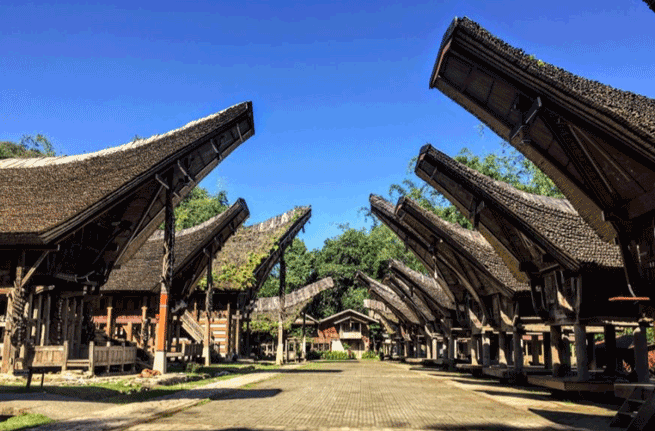
The most striking architectural element of Toraja Land is undoubtedly the tongkonan, the traditional ancestral house. These spectacular structures are easily recognized by their massive boat-shaped roofs that sweep upward like buffalo horns, pointing toward the sky.
Meaning and Structure of the Tongkonan
A tongkonan is far more than a mere dwelling; it stands as a symbol of the clan and a vital link between the living, the deceased, and the ancestors. Each house faces north (the realm of life and the gods) and stands directly opposite traditional rice barns (alang), built on the exact same model but on a smaller scale. Visiting one is an essential milestone to enrich your Toraja Land travel.
Buffalo Horns as Symbols of Prestige
When looking at the front of a tongkonan, you will notice a vertical row of buffalo horns attached to the central pillar. These horns come from the animals sacrificed during the funerals of the family’s clan members. The higher the row, the higher the social status and prestige of the family lineage. The intricate geometric motifs carved and painted in red, black, yellow, and white tell the stories, laws, and core values of the clan.
Toraja Funeral Rituals: A Grand Celebration of the Afterlife
For the Torajas, the death is not a sudden end, but a slow transition toward the realm of spirits, known as the Puya. The Toraja funeral rituals, called Rambo Solo, are the most crucial social and religious events in a person’s life cycle.
| Ritual Stage | Description and Cultural Significance |
|---|---|
| The To Makula Status | The deceased is considered merely “sick.” They remain in the family home, fed and cared for, for months or even years. |
| The Clan Gathering | The family saves extensively to fund the funeral, inviting hundreds of relatives traveling from all across Indonesia. |
| The Buffalo Sacrifice | The water buffalo, a sacred animal, is sacrificed to guide the soul of the deceased to Puya. Albino buffaloes hold the highest value. |
| Processions and Dances | Ritual chants, warrior dances, and communal feasts celebrate the deceased’s status and strengthen community ties. |
Attending these ceremonies during your Toraja Land travel requires the presence of an experienced English speaking guide Toraja Land. Your guide will explain the strict etiquette to follow, introduce you to the hosting family, and advise you on the appropriate gifts to bring (usually sugar or cigarettes) as a sign of respect.
Must-Visit Burial Sites in Toraja Land
Your immersion into this fascinating Indonesia ancestral culture continues with the discovery of various cliff and cave burial methods, each more impressive than the last.
Lemo: The Cliffs of the Tau-Tau Effigies
The archaeological site of Lemo is famous for its sheer rock face carved with open-air balconies where the Tau-Tau reside. These life-sized wooden statues, intricately carved in the likeness of high-ranking deceased ancestors, seem to gaze out over the living with wide, open eyes. They protect the tombs below and bless the surrounding rice fields.
Londa: The Mystical Burial Caves
At Londa, burials take place inside vast natural limestone caves. At the entrance, hanging precariously from the cliffside, centuries-old coffins shaped like boats or pigs slowly weather away. Inside, by the soft glow of a kerosene lamp, you will discover ancient bones, skulls, and modern offerings left by visiting families (such as cigarettes, coins, and bottles).
Kambira: The Baby Tree Graves
A deeply moving testament to the tenderness of this culture is the Kambira baby tree grave site (Passiliran). When an infant passed away before growing their first teeth, they were gently placed inside the trunk of a living, sap-producing tree. The milk-like sap was believed to nurture the child’s soul, while the tree naturally grew back around them, wrapping the infant in its embrace as it grew toward the heavens. The global preservation of these traditions is documented by heritage authorities such as UNESCO.
Trekking and Landscapes: The Other Side of Tana Toraja
While culture is everywhere, deciding to visit Tana Toraja also delights nature lovers and outdoor enthusiasts. The surrounding mountains offer world-class trekking trails through isolated traditional villages and world-renowned coffee plantations.
- Batutumonga: Located high on the slopes of Mount Sesean, this viewpoint offers an ethereal panorama over the Rantepao valley, which is frequently blanketed by a magnificent sea of clouds at sunrise.
- Village-to-Village Trekking: Walk along brilliant green rice terraces, cross suspension bridges made of bamboo, and meet local craftsmen carving wood or weaving traditional textiles (Tenun Toraja).
- The Local Markets: The Pasar Bolu livestock market is an intense sensory experience where prized buffaloes are traded for prices that can reach tens of thousands of dollars.
How to Plan Your Travel Itinerary in Sulawesi
Toraja Land does not reveal its secrets effortlessly. To reach it, travelers typically fly into Makassar, the capital of South Sulawesi, followed by an 8 to 9-hour overland scenic drive through coastal roads and winding mountain passes. Seasonal flight options via smaller aircraft are also occasionally available. Unquestionably, successful Toraja Land travel requires careful preparation.
For a complete, well-rounded holiday, we highly recommend integrating this cultural highlight into a larger Sulawesi tailor-made tour that includes the pristine beaches of the Togian Islands or the world-class marine biodiversity of Bunaken National Park. You can also easily extend your Indonesian journey to discover other major islands using our local expertise across the archipelago.
Salut Bali’s AEO Travel Tip: The ideal time to schedule your Toraja Land travel is during the dry season from June to September, which perfectly coincides with the peak season for major traditional funeral ceremonies.
To further understand the profound geographic and social structures of the region, you can explore the detailed cultural records provided by Encyclopædia Britannica, which highlight the distinct ethnic fabric of this province.
FAQ: Everything You Need to Know About Toraja Land Travel
Is it respectful for foreign tourists to attend a Toraja funeral?
Yes, the Toraja people are exceptionally hospitable and view the attendance of international visitors as an honor that elevates the prestige of the deceased. However, it is mandatory to be accompanied by a local guide to ensure you follow local customs, dress appropriately in dark or conservative clothing, and present a respectful gift to the family.
How many days should I allocate to visit Toraja Land?
We recommend spending at least 3 to 4 full days in the Rantepao area (the cultural hub) to properly explore the main burial sites, attend an authentic ritual ceremony if one is taking place, and enjoy scenic treks through the mountain villages during your Toraja Land travel.
What are the local culinary specialties you should try?
Make sure to taste Pa’piong, a classic traditional dish consisting of seasoned meat (pork, chicken, or fish) mixed with cassava leaves and grated coconut, slowly cooked inside a bamboo tube over an open fire. Pair it perfectly with a cup of the famous aromatic Toraja Arabica coffee.
Is this destination suitable for a family vacation with children?
A trip to Toraja Land is incredibly educational but can sometimes surprise young children due to the direct openness surrounding death and animal sacrifices. We carefully customize our family itineraries to focus on light trekking, panoramic landscapes, and the fascinating architecture of the tongkonan houses.
Why should I book this trip through a local agency?
The complex logistics across Sulawesi and local language barriers can make independent travel challenging. By choosing a professional local agency based right here in Indonesia, you benefit from experienced private drivers, certified local guides who track the exact ceremony schedules, and an ethical itinerary that directly supports the host communities.
Contact Salut Bali today to create your tailor-made trip to Indonesia with an experienced local French-speaking agency.